Friday, 11 August 2017

Ρίγος, Φρίκη, Αφρική και Freak

Ρίγος < ῥῖγος και άρα (F)ρῖγος
Πιθανό να σχετίζεται με την φρίκη.
Φρίκη < Φρίξ και Φρίσσω, φριξός, φριχτός.

Η φρίκη έχει δύο νοήματα που πιθανότερο όμως είναι να συνδέονται.
1. ο μικρός κυματισμός
2. το ανατρίχιασμα λόγω κρύου, φόβου, έντονης συγκίνησης

Ο φριξός μπορεί να σημαίνει και αυτόν που τον έχει κατακλήσει η Φρίκη, αλλά και αυτόν που την προκαλεί, τον τρομαχτικό και τρομερό.

Ενδιαφέρον είναι το σύνθετο παράγωγο Αφρική, σε συνδυασμό με το στερητικό "α-".

Το Αγγλικό Freak δεν περνάει από το νου τους να το συνδέσουν οι Άγγλοι ετυμολόγοι αν και τελικώς η ετυμολογία του είναι άγνωστη.

freak (n.1)
1560s, "sudden and apparently causeless turn of mind," of unknown origin. Perhaps it is from a dialectal survival of a word related to Middle English friken "to move nimbly or briskly," from Old English frician "to dance" [OED, Barnhart]. There is a freking attested in mid-15c., apparently meaning "capricious behavior, whims." Or perhaps from Middle English frek "eager, zealous, bold, brave, fierce"

Και τα 2 νοήματα όμως παραμένουν σταθερά με τις 2 Ελληνικές εκδοχές.
Το friken "to move nimbly or briskly," from Old English frician "to dance" ταιριάζει με το πρώτο, τον κυματισμό, ενώ το frek "eager, zealous, bold, brave, fierce" ταιριάζει με τον "φριξό"

Wednesday, 19 July 2017

Fool, Follia, Φολλίς

From www.etymonline.com I gather the following:

fool (adj.)
{c. 1200, "sinful, wicked; lecherous" (a fool woman (c. 1300) was "a prostitute"), from fool (n.1).}

and ... fool (n.1)
{early 13c., "silly, stupid, or ignorant person," from Old French fol "madman, insane person; idiot; rogue; jester," also "blacksmith's bellows," also an adjective meaning "mad, insane" (12c., Modern French fou), from Medieval Latin follus (adj.) "foolish," from Latin follis "bellows, leather bag," from PIE root *bhel- (2) "to blow, swell."

The sense evolution probably is from Vulgar Latin use of follis in a sense of "windbag, empty-headed person."}

Etymonline is a relible eymological source for me as it has managed to index the most expensive etymological dictionaries, I would not have had access to if it wasn't for this online tool.

I believe though the linguists here are myopic and overeager to resolve the etymology of Latin follis and connect it with a PIE root, overlooking the greek connection, probably influenced by the use of Vulgar Latin as stated just above.

Considering the use of fool is attested very early, Vulgar latin may have been influenced back by the use of the word, not of course necessarily in English, but by the use of the "sinful, wicked; lecherous" meaning of the word in other languages of the time.

Linguists simply cannot overlook the Greek use of word, especially when there is no sign of evolution, but the word is carried over as identical.

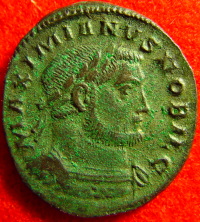
Φολλίς (follis) in Greek means a thin layer, it most probably of aiolic origin and was later used in Roman and Byzantine times to describe a greenish cheap coin with a silver outer layer, the folla (plural follia). The name carries on well into the 14th century in the form of trifollaro (greek form) trifollaris (latin version). 1 trifollaro = 3 follia.

So usage of this coin surpasses historically even that of a fool woman, the prostitute, which in turn may be derived from folla, meanning "cheap".

To this I will add the alternate PIE root etymology that was proposed and overlooked in favour of the PIE root *bhel- (2) "to blow, swell", and that is from PIE root *dʰolyom (*dʰel- (“be green”)). Green was the colour that these coins often took after some time because of the low quality of silver, so there may well be a meaningfull connection.

The Greek φολίς (flake) wtith 1 "λ", has an unknown etymology, so it may be a simplification of φολλίς, hence the similarity in meaning.


Sources:
https://en.wikipedia.org/wiki/Follis
https://en.wiktionary.org/wiki/folium#Latin
http://www.etymonline.com/index.php?allowed_in_frame=0&search=fool
https://en.wikipedia.org/wiki/Follis#/media/File:Galerius_follis.jpg

Jinx, Ίυγξ (wryneck, Θερκοπούλι)

jinx (n.)
1911, American English, originally baseball slang; perhaps ultimately from jyng "a charm, a spell" (17c.), originally "wryneck" (also jynx), a bird used in witchcraft and divination, from Latin iynx "wryneck," from Greek iynx.

Στην ελληνική μυθολογία με το όνομα Ίυγξ είναι γνωστή μία θυγατέρα του θεού Πάνα και της Νύμφης Ηχούς. Αναφέρεται ότι η Ίυγξ έδωσε στον Δία να πιει το μαγικό φίλτρο του έρωτα, που του προκάλεσε τον ασίγαστο ερωτικό πόθο για την Ιώ. Για τον λόγο αυτό, η ζηλιάρα Ήρα τη μεταμόρφωσε στο ομώνυμο πουλί (το σημερινό jynx torquilla της οικογένειας των δρυοκολαπτιδών), το οποίο χρησιμοποιούσαν οι αρχαίοι Έλληνες ως ξόρκι του έρωτα. Π.χ. δίνεται από τη θεά του έρωτα Αφροδίτη στον Ιάσονα, ο οποίος περιστρέφοντάς το και απαγγέλλοντας κάποιες μαγικές λέξεις προκαλεί τον έρωτα στη Μήδεια.

Σε μία άλλη παράδοση, η Ίυγξ ήταν κόρη του Πιέρου, που με τις αδελφές της προκάλεσαν σε διαγωνισμό τις Μούσες, έχασαν και η Ίυγξ μεταμορφώθηκε στο ομώνυμο πτηνό (σήμερα γνωστό ως θερκοπούλι).

In Greek mythology, Iynx was an Arkadian Oreiad nymph; a daughter of the god Pan and either Peitho or Echo. She cast a spell on Zeus which caused him to fall in love with Io. In consequence of this, Hera metamorphosed her into the bird called iynx (Eurasian wryneck, jynx torquilla).

According to another story, she was a daughter of Pierus, and as she and her sisters had presumed to enter into a musical contest with the Muses, she was changed into the bird iynx. This bird, the symbol of passionate and restless love, was given by Aphrodite to Jason, who, by turning it round and pronouncing certain magic words, excited the love of Medea.


Sources:
http://www.etymonline.com/index.php?allowed_in_frame=0&search=jinx
https://en.wikipedia.org/wiki/Iynxhttps://el.wikipedia.org/wiki/Ίυγξ

Monday, 12 June 2017

A place to bury strangers

Μία ονομασία ενός συγκροτήματος η έμπνευση της σημερινής αναζήτησης. Από δημοσίευση της Νίκης Τ. στην ομάδα Shoegaze - Dream pop (Greece) που αφορά στους A place to Bury Strangers.

Place < Lat. Platea "open space" < Grk. Plateia Odos "wide road"

Bury < Old Eng. byrgan "to raise a mound, hide, bury, inter," < Proto-Germanic *burzjan- "protection, shelter" < PIE root *bhergh- "high" < according to Beekes of Pre-Greek origin (Pyrgos < Pergamon)

Stranger < Old French estrange "foreign, alien, unusual, unfamiliar, curious; distant; inhospitable; estranged, separated" (Modern French étrange), < Latin extraneus "foreign, external, from without" (πηγή και του Italian strano "strange, foreign," Spanish extraño). Οι Άγγλοι και Γάλλοι ετυμολόγοι σταματούν την ετυμολογική τους ανάλυση εδώ. Δύναται όμως περαιτέρω ανάλυση, που εξηγεί και την έννοια καλύτερα.

Extraneus πιθανολογείται μάλλον < Lat. ex < PIE ex (Grk έξω) + Lat. terra (land) < Grk teresesthai "to become or be dry," tersainein "to make dry;" συγγενές με τα μεταγενέστερα Sanskrit tarsayati "dries up;" Avestan tarshu- "dry, solid;". Συγκρίνετε σε αυτή την περίπτωση με το "Mediterraneus"
Εναλλακτικά το Extraneus είναι συγγενές του exter, συγκριτικός βαθμός του έξω. Συγκρίνετε με το Lat. interior (συγκριτικός βαθμός του μέσα) και το Grk enteron (συγκριτικός βαθμός του μέσα). Αυτή την τελευταία φαίνεται να προτιμούν οι ίδιοι οι Ιταλοί που ετυμολογούν το Extraneus από την ρίζα extra και την κατάληξη -aneus, και αντίστοιχα το extra από το exter + την κατάληξη -a.

Sunday, 21 May 2017

Deal

Deal

I was caught up in an online conversation about the etymology of "Hellas" and "Helen". In the comments a commentator mentioned the menunos father, from the movie "my big fat Greek wedding", and he got a ton of requests from other users, to trace the Greek origins of random words.

One user in particular, Turgon92, asked for the etymology of "Deal" so I looked it up just for fun, and the results I got really caught me by surprise.

It seems the English Deal comes from IndoEuropean root "dail-"
To divide. Northern Indo-European root extended from *da(h2)i‑ (see -).
deal1, from Old English dǣlan, to share, from Germanic *dailjan.

So dail- comes from "-" so I look that up, as requested by the entry, and it seems it is a simplified form of "dai-"
To divide. Oldest form *deh2‑, colored to *dah2‑, becoming *‑.
Variant *dai‑, from extended form *daəi‑, with zero-grade *‑ (< *diə‑, metathesized from *dəi‑).
Root form *dai‑. geodesy, from Greek daiesthai, to divide.

????

and this is not from some ethnocentric Greek bull, it's from the American Heritage Dictionary

So Deal < from Old English dǣlan < from Germanic *dailjan < from PIE dail- < from PIE - which is a simplified version of an older form < *deh2‑, colored to *dah2‑, becoming *‑, which root come from Greek dai- found in the Greek words daiesthai, to divide and daimon  (yes, demon)

From the root *‑ comes  demos, which gives deme, demos, demotic; demagogue, demiurge, democracy, demography, endemic, epidemic, pandemic
and also a suffixed variant form *dī-ti‑ which evolves to the English word Tide. (!!!!!!)

Also a suffixed variant form *dī-mon‑ gives the word time, from Old English tīma, time, period, from Germanic *tīmōn‑.

Unbelievable stuff.

My source:
https://www.ahdictionary.com/word/indoeurop.html#dā-
https://www.ahdictionary.com/word/indoeurop.html#dail-


Κραφτ & βερκ (Kraft & Werk)

Το kraft με δυσκόλεψε αλλά κοιτάξτε να δείτε τί βρήκα.

Το craft οι άγγλοι το ετυμολογούν από το Γερ. Kraft από το ΠρωτοΓερμανικό *kraftaz (“strength, power”), που οι Γερμανοί ετυμολογούν από Proto-Indo-European *ger- (“to turn, wind”).

Το πρόβλημα είναι ότι σε όλα τα λεξικά των ινδοευρωπαϊκών ριζών δεν υπάρχει λήμμα *ger- σε αυτή την καθαρή μορφή. Επίσης στις Γερμανικές γλώσσες περιορίζεται σε νόημα σε αυτή τη μορφή.

Δεν μπόρεσα να μην κάνω την σύνδεση με το γερός αφού . Το γερός όμως δεν είναι αρχαίο, αλλά απαντάται στην κοινή, ας πούμε από τα χρόνια του Αλέξανδρου.

Δείτε τί όμορφη ετυμολογία που έχει:
γερός < ελληνιστική κοινή γερός< *ὑγηρός < αρχαία ελληνική ὑγιηρός < ὑγιής

Τα "Πρωτο-Γερμανικά" θεωρούνται ότι μιλούνταν από τον 5ο αιώνα π.Χ. και μετά, ενώ η κοινή από τον 4ο αιώνα π.Χ., δέν έχουν παραπάνω από 150-200 χρόνια διαφοράς έναρξης. Φυσικά και υπήρχε μεγάλο διάστημα κοινής ομιλίας.

Δεδομένου
α) του περιορισμένου νοήματος του "Kraftaz" (οι γηγενείς ρίζες παράγουν περισσότερα νοήματα)
β) της χρονικής ταυτότητας
γ) της γεωγραφικής δυνατότητας επαφής
δ) τη διάδοση της κοινής (Οι κέλτες αυτή την εποχή γράφουν με Ελληνικό αλφάβητο και χρησιμοποιούν πολλές Ελληνικές λέξεις) μόνο μετά τα μισα του 1ου αιώνα π.Χ. οικειοποιούνται το Λατινικό αλφάβητο
ε) την ετυμολογία που δίνουν οι ίδιοι οι Γερμανοί
στ) την απουσία άλλης ετυμολογικής ιστορικότητας της ρίζας *ger- από άλλες Ινδο-Ευρωπαϊκές γλώσσες, και
ζ) την εξέλιξη της Ελληνικής λέξης,

οι Γερμανοί, κατά πάσα πιθανότητα δανείστηκαν την λέξη και το νόημά της, από την κοινή Ελληνική και όχι από την αρχαία.

Το Werk έχει διερευθυνθεί αρκετά.

From Old High German werc, werh, werk, from Proto-Germanic *werką, from Proto-Indo-European *wérǵom, η οποία ρίζα δίνει νοήματα σε διάφορες γλώσσες:

Armenian: գործ (gorc), Slavic: *vьrša (“fishing basket, osier fish-trap”) (possibly), Celtic: *wergā, Old Irish: ferg (“anger”), Welsh: gwery (“active, lively”), Germanic: *werką (see there for further descendants), Sanskrit: वर्ज (varja, adj.), Avestan: (varəzəm), Tocharian A: wark (“wickerwork”)

Τα Ελληνικά όμως είναι αδιαμφισβήτητα η σημαντικότερη πηγή στη διαμόρφωση της ΠΙΕ ρίζας:
Hellenic: *wérgon
Ancient Greek: ἔργον (érgon)
Doric Greek: ϝέργον (wérgon)
Elean Greek: ϝάργον (wárgon)

Wednesday, 22 February 2017

Ποδόσφαιρο, Football

Ποδόσφαιρο in Greek is rather easy as it is a compound word of ancient Greek words πους and σφαίρα, meaning foot and ball.

Πους related to Latin ped Old English fot and English foot.
Alternate Greek forms: πῶς (pos), Doric πός (pos), Laconic πόρ (por), Ionic κῶς (kos).
The ionic form is most interesting, I wonder if it evolved somewhat different, giving other words in the future. The island Kos (attested since the Iliad) was part of the Doric Hexapolis, it must not be related.

Σφαίρα not related, but I can't get to an etymology either.

Football in english is comprised of the same two compounds, foot and ball.
Foot (n.)
"terminal part of the leg of a vertebrate animal," Old English fot "foot," from Proto-Germanic *fot (source also of Old Frisian fot, Old Saxon fot, Old Norse fotr, Danish fod, Swedish fot, Dutch voet, Old High German fuoz, German Fuß, Gothic fotus "foot"), from PIE root *ped- (1) "a foot" (source also of Avestan pad-; Sanskrit pad-, accusative padam "foot;" Greek pos, Attic pous, genitive podos; Latin pes, genitive pedis "foot;" Lithuanian padas "sole," peda "footstep").
http://www.etymonline.com/index.php?term=foot

Now concerning ball there is a little confusion because the English linguists only go as so far as the Germanic languages are concerned, but do go to the trouble to tie it from PIE *bhel- (2) "to blow, inflate, swell" and give a bunch of derivatives: (source also of Greek phyllon "leaf," phallos "swollen penis;" Latin flos "flower," florere "to blossom, flourish," folium "leaf;" Old Prussian balsinis "cushion;" Old Norse belgr "bag, bellows;" Old English bolla "pot, cup, bowl;" Old Irish bolgaim "I swell," blath "blossom, flower," bolach "pimple," bolg "bag;" Breton bolc'h "flax pod;" Serbian buljiti "to stare, be bug-eyed;" Serbo-Croatian blazina "pillow").
http://www.etymonline.com/index.php?term=ball
http://www.etymonline.com/index.php?term=bole

But another PIE root for to blow, inflate, swell exists and it is *bew- which gives words in Germanic languages only, which mean "Tree trunk".
https://en.wiktionary.org/wiki/Reconstruction:Proto-Germanic/b%C5%ABl%C5%8D

They avoid the Italian and Latin influence, let alone the Greek one.  The word the Italians use is Balla, and a word in use modern Greek too μπάλα (loan from Italian). Now looking at the italian etymology, I found something very interesting, the tie to one of the Godess Athena epithets. The italian etimology stated it either originates with Germanic, or with greek βάλειν and/or πάλλας
http://www.etimo.it/?term=balla

Βάλλω is derived by linguists by a different PIE root *gʷl̥-ne-h₁- < *gʷelH-
and which in consensus does give the Latin ballō and from there the Italian ballo, meaning "a dance" or "ball"
https://en.wiktionary.org/wiki/ballo#Latin

Someone is obviously wrong, and I suspect someone oversimplified the changes words underwent, or simply was driven by a kind of wishfull thinking scientists often fall in, by predetermining the outcome of their own research, as there is no linguist who is not himself a speaker of some language, and thus himself immersed in a cultural sub-context.
I don't have the knowledge to pass judgement on who is right, I am not a linguist myself, I have only studied Communication and Philosophy, but will make a note of this and continue searching.

As for Πάλλας, this gives πάλλω (throb), but also Παλλάδα (probably meaning virgin, but may also mean pure, shinning, protector etc.), παλλάδιο (palladium), παλληκάρι (stalwart), παλλακίδα (concubine)
https://el.wiktionary.org/wiki/%CE%A0%CE%B1%CE%BB%CE%BB%CE%AC%CE%B4%CE%B1

I want to thank Chrissa Marasli for pointing out there's something going on with the etymology of the word "ball".